


The Quiet Advantage of Experience in the Age of AI
Something interesting has been happening lately when people my age start talking about artificial intelligence. At some point in the conversation someone usually says, half joking and half serious, “I think we might have missed it.”
I understand the feeling.
Everywhere you look, a twenty-something founder seems to be launching an AI startup before most of us have finished our morning coffee. Entire products are appearing in days. Departments are being automated. Companies are being built faster than many of us can even learn the tools.
It’s easy, especially if you’re over fifty, to look at all that speed and wonder if you somehow showed up late to the party.
I had that thought myself not long ago. I remember sitting in front of my computer watching younger founders ship AI tools in days and thinking, for a brief moment, that maybe this was a revolution that belonged to someone else.
But the interesting thing about that feeling is how quickly it faded once I stopped watching the AI wave from the sidelines and actually started using the tools in my own work.
What became clear almost immediately is that this wave of technology might operate very differently from the ones that came before it.
For the first time in a long while, experience may quietly become the real advantage.
Most previous technological revolutions rewarded people who could master complicated tools faster than everyone else. The early internet favored those who could code. Social media rewarded those who understood platforms and algorithms before the rest of the world caught on. Mobile technology elevated developers who could build apps at extraordinary speed.
In each of those moments the edge often belonged to youth, not necessarily because younger people were smarter, but because they had fewer habits, fewer responsibilities, and more time to immerse themselves in the emerging systems.
Artificial intelligence changes that equation in a subtle but important way.
You don’t need to learn a programming language to interact with it. You don’t have to spend years becoming a technical specialist. Most of the time you simply begin a conversation. You ask questions. You challenge the responses. You refine the direction.
What determines the value of the interaction is not how quickly you can type instructions.
It’s whether you know what questions are worth asking in the first place.
And that’s where something interesting happens.
Knowing what questions matter isn’t a technical skill.
It’s a judgment skill.
Judgment tends to accumulate slowly over time. It comes from watching ideas succeed and watching others fail. It comes from making decisions that cost real money or real relationships when they go wrong. It comes from recognizing patterns that only become visible after you’ve lived through enough cycles of enthusiasm, disappointment, reinvention, and growth.
When people talk about pattern recognition in artificial intelligence, they’re usually referring to mathematical analysis across massive datasets. Human pattern recognition works differently. It’s built through experience. It’s the quiet understanding that emerges after decades of observing how people behave, how businesses evolve, and how certain ideas that seem brilliant in the beginning unravel once they encounter the real world.
Speed can be impressive.
But speed without context produces an extraordinary amount of noise.
Experience creates context.
In my own life the path certainly hasn’t been linear. I grew up in Lebanon during a war. I studied economics in Switzerland without really knowing where it would lead. I eventually found my way into design, entrepreneurship, and into conversations with people whose stories fascinated me. None of those things were part of some perfectly crafted master plan. They emerged from curiosity and from the twists and turns of life itself.
And those twists create perspective.
When I use AI now, I’m not trying to impress anyone by building the fastest gadget or the cleverest novelty application. What interests me is something deeper. I use these tools to explore possibilities, pressure-test ideas, uncover blind spots in strategies that might otherwise appear solid, and challenge assumptions before they turn into expensive mistakes.
Sometimes I push the conversation further. Sometimes I question the output. Sometimes I disagree with it entirely and start over.
The technology becomes a partner in thinking rather than a replacement for it.
That kind of interaction isn’t something you learn from a tutorial. It grows out of the mistakes you’ve already made and the lessons you’ve already paid for. Those lessons become the lens through which the technology becomes useful.
Every technological wave tends to follow a familiar emotional arc. First there is excitement and the sense that everything is about to change overnight. Then comes the phase of exuberance where people believe the technology will solve problems that have existed for centuries. Eventually reality introduces a few complications, expectations recalibrate, and the tools begin to integrate into everyday life.
We’ve seen this pattern with the internet, with social media, with mobile devices, and with many other innovations along the way.
Artificial intelligence will almost certainly travel a similar path.
The early phase is filled with experimentation and breathtaking speed. But as the technology settles into the fabric of everyday work, the real differentiator will not be who discovered it first.
The real differentiator will be who knows how to apply it thoughtfully.
There’s a phrase we use sometimes in The Raad Life community. We talk about being seasoned rather than simply aging. Seasoning implies that time has added depth, not diminished it. It suggests that experience has created perspective and wisdom that can’t be rushed.
That’s where a seasoned life becomes valuable.
If you’ve spent decades building businesses, navigating partnerships, learning how organizations behave under pressure, and understanding the difference between a clever idea and a durable one, those experiences begin to matter in new ways.
When tools become easy to use, the advantage shifts away from technical mastery and toward wisdom about where and how those tools should be applied.
In other words, the people who quietly shape the future of this technology may not only be the youngest founders racing to create the newest AI platforms. They may also be the people who have spent years learning how the world actually works, designers, entrepreneurs, leaders, builders, and operators who understand systems at a human level and recognize the subtle consequences of decisions that look simple on paper.
Artificial intelligence may become one of the most transformative technologies of our era, but the ability to guide powerful tools with thoughtful judgment remains deeply human. Machines can generate answers at extraordinary speed but knowing which answers matter and what they mean in the context of real life is something that still grows slowly through experience.
So if you’re someone who looks at the rapid pace of the AI world and wonders whether you’ve fallen behind, it might be worth reconsidering that assumption.
The moment we are entering may actually reward the people who have spent years developing perspective, patience, and a sense of proportion.
When powerful tools become accessible to everyone, wisdom becomes more valuable not less.
And wisdom, as it turns out, is one of the few advantages that truly improves with time.
The future may indeed be built with AI.
But the people who guide it wisely will likely be those who have lived long enough to recognize the difference between speed and wisdom.
And for the first time in a long time, that may make a seasoned life the real unfair advantage.
About the Author:
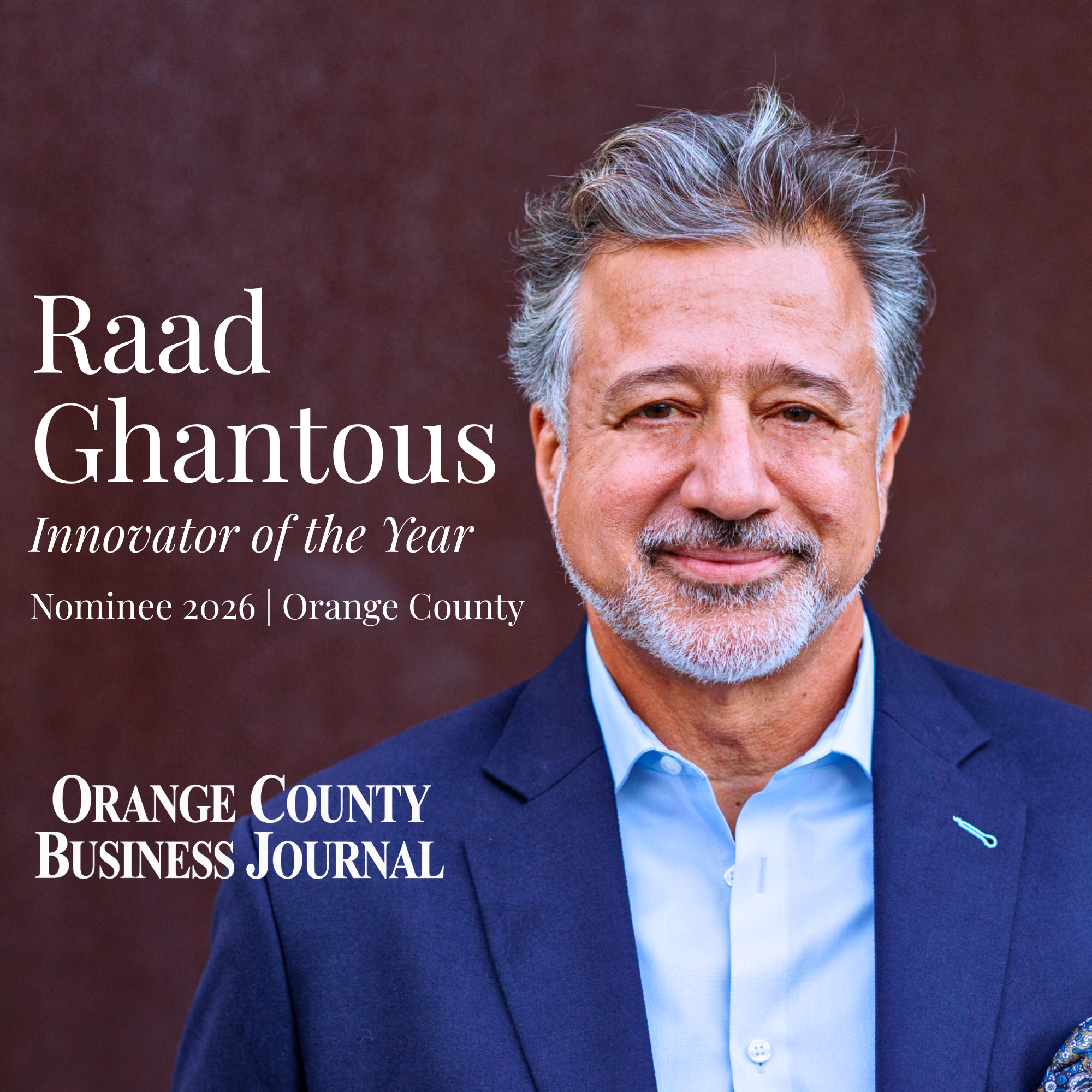
Raad Ghantous is a designer by trade and a reinvention architect by choice. Raised internationally and shaped by decades in hospitality and residential design, he now leads The Raad Life — a platform for seasoned leaders who refuse to coast into midlife quietly. Through media, live gatherings, and curated collaborations, Raad explores identity after success and the freedom to consciously design your next chapter. Find us at theraadlife.com.